
By Brandon Burkey, Founder & CEO, Xtreme Mats
Quick answer
If you have unspent year-end operating or capital dollars, put a cabinet mat and a leak sensor in every kitchen and bath sink cabinet. The work needs no permits, has short lead times, and installs during a turn or make-ready. Water damage was the No. 1 apartment claim type in an NMHC survey (70.2% of firms). Add a 2027 Cabinet Protection line in your budget for new installs and for sensor replacements every two years.
If you have unspent 2026 operating or capital dollars and about eight weeks left to commit them, one of the best low-cost, quick-to-install places to invest those funds is under the sink. In NMHC's most recent claims survey, water damage was the most common claim among apartment operators. Insurance now takes a much bigger bite out of NOI than it did a few years ago. And underwriters increasingly want to see proof of prevention. A cabinet mat plus a leak sensor in every kitchen and bath sink cabinet is a small purchase, it can be installed during your next turn, and you can carry it into 2027 as its own line item: cabinet protection or water damage prevention.
Here's how I'd think about it.
Why Q4 is the moment
Most operators are doing two things at once right now: closing out 2026 and defending their 2027 numbers. Advice from the construction side is simple. Sort what's left into projects you can complete by December 31, projects you can commit to now for a Q1 start, and projects to plan for next year. Approve the "complete" list in early November so materials can be ordered right away (Maloney Construction).
Under-sink protection fits the "complete" bucket. It needs no permits, has no long lead times, and doesn't disrupt residents. A maintenance tech can install it during a service call or a make-ready.
The 2027 budget conversation points the same way. In Multifamily Executive's 2027 budget roundup (Sept. 16, 2026), operators described moving dollars away from ROI-driven renovations and toward "resident retention and realistic repair reserves." They also warned that after a better 2026 renewal, the insurance market is already showing signs of hardening again. In that kind of year, small, documented risk reduction is easy to justify.
Turning unspent budget into risk reduction
"Use it or lose it" gets a bad reputation because it can lead to rushed, low-value spending. The fix isn't to leave the money on the table. It's to spend it on something that cuts a known, recurring risk.
Water is that risk. In an NMHC survey reported by Multifamily Dive, 70.2% of apartment firms said water damage was among the claims they filed, which made it the No. 1 claim type, ahead of liability and fire.
Insurance costs make every claim matter more. A Federal Reserve analysis (Sept. 19, 2025) of apartment operating statements found that average property insurance cost rose from $39 to $68 per unit per month between 2019 and 2024 (in real terms), an increase of more than 75%. It also found that each $1 increase in insurance cost reduced owners' net income by about 72 cents. Owners, not residents, are absorbing most of it.

Even where base rates have eased, the terms haven't. Multi-Housing News (Oct. 14, 2026) reports that insurers are tightening underwriting, raising deductibles, and adding sublimits on water damage. NAA's Tiana Heath told the publication that documenting preventive maintenance and keeping clear repair and incident records "are essential in today's environment." The same article notes that insurers may offer better terms for leak detection and smart sensors that monitor supply lines and other points of failure. IREM (July 29, 2026) puts it simply: underwriters' question "has shifted from what's the exposure to what's being done about it," and the evidence they want includes preventive maintenance programs and water intrusion controls.
A documented, property-wide under-sink program is exactly the kind of evidence you can put in a renewal submission. (Whether it changes your premium depends on your carrier. Ask your broker.)
The math of a leak vs. prevention
I won't invent a number for what an under-sink leak costs your portfolio. Your own work-order and claims history is the best source. Here are the published reference points:
- Sink leaks: The Hanover Insurance Group puts average repair cost for sink-related water damage at about $7,000 (Hanover). That's homeowner data, and the underlying figures date to 2014 through 2018.
- Cabinet bases: Angi's 2026 cost data puts the national average to replace the bottom of kitchen cabinets at $5,000, with a range of $150 to $10,000 depending on material and extent of damage (Angi). That's homeowner pricing, and your trade costs will differ.
- Water claims in general: Triple-I, using ISO data, reports an average water damage and freezing claim of $15,400 for 2019 to 2023 (Triple-I).
None of those figures include what doesn't show up on the invoice: an offline unit, a displaced resident, a unit below that also gets wet, a renewal you might lose, and hours your team spends on a wet cabinet instead of the make-ready board.
Compare that with prevention: a mat that contains the water first and a sensor that sounds an alarm. Trade pricing is based on order volume, so request a quote for your unit count. If one avoided cabinet replacement pays for protection across many units, the decision is easy. Run it against your own numbers.
A simple per-unit planning approach
This doesn't need a capital study. Here's the planning model I suggest:
- Count sink cabinets per unit type. One kitchen plus one vanity per bathroom. A 2-bed/2-bath unit is three cabinets.
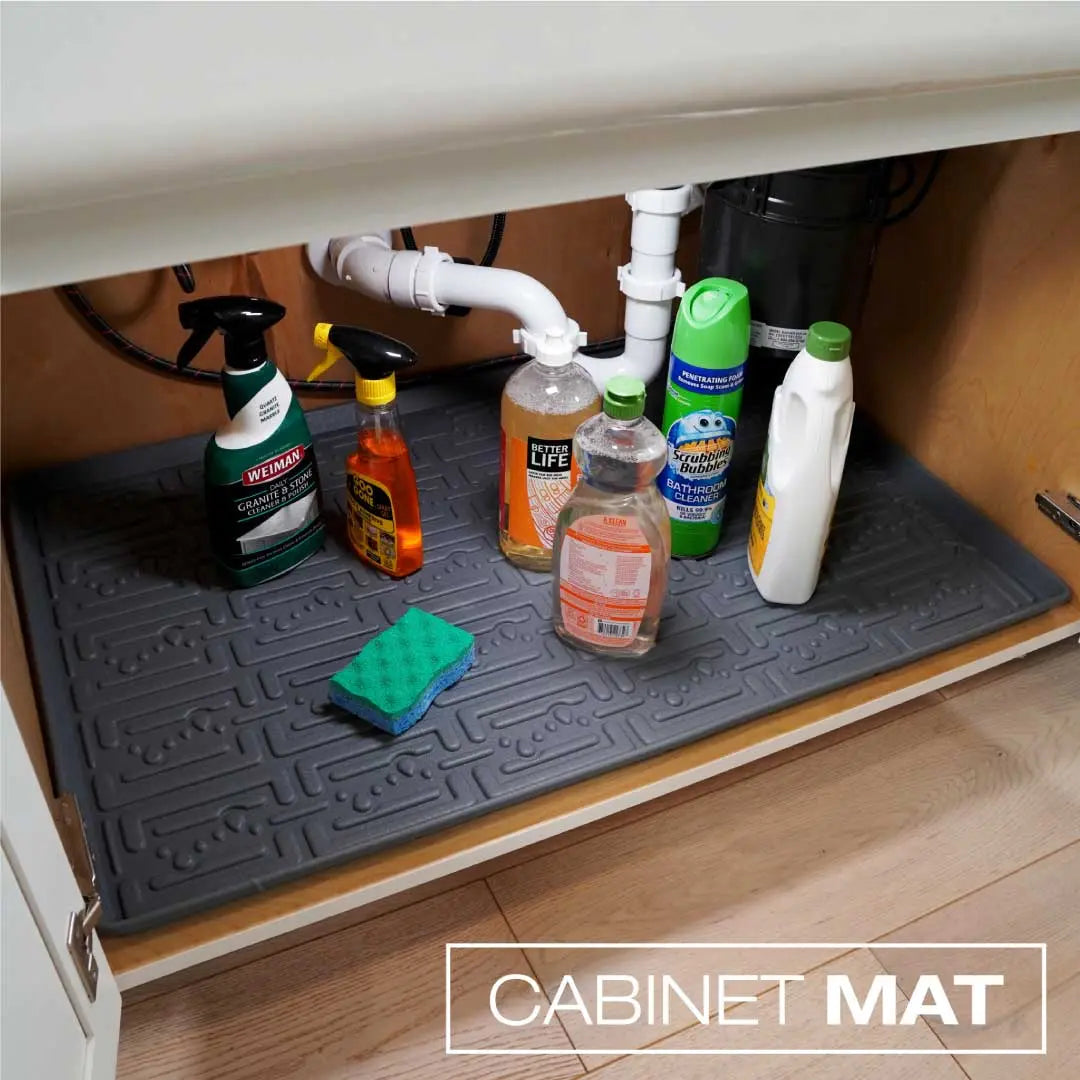
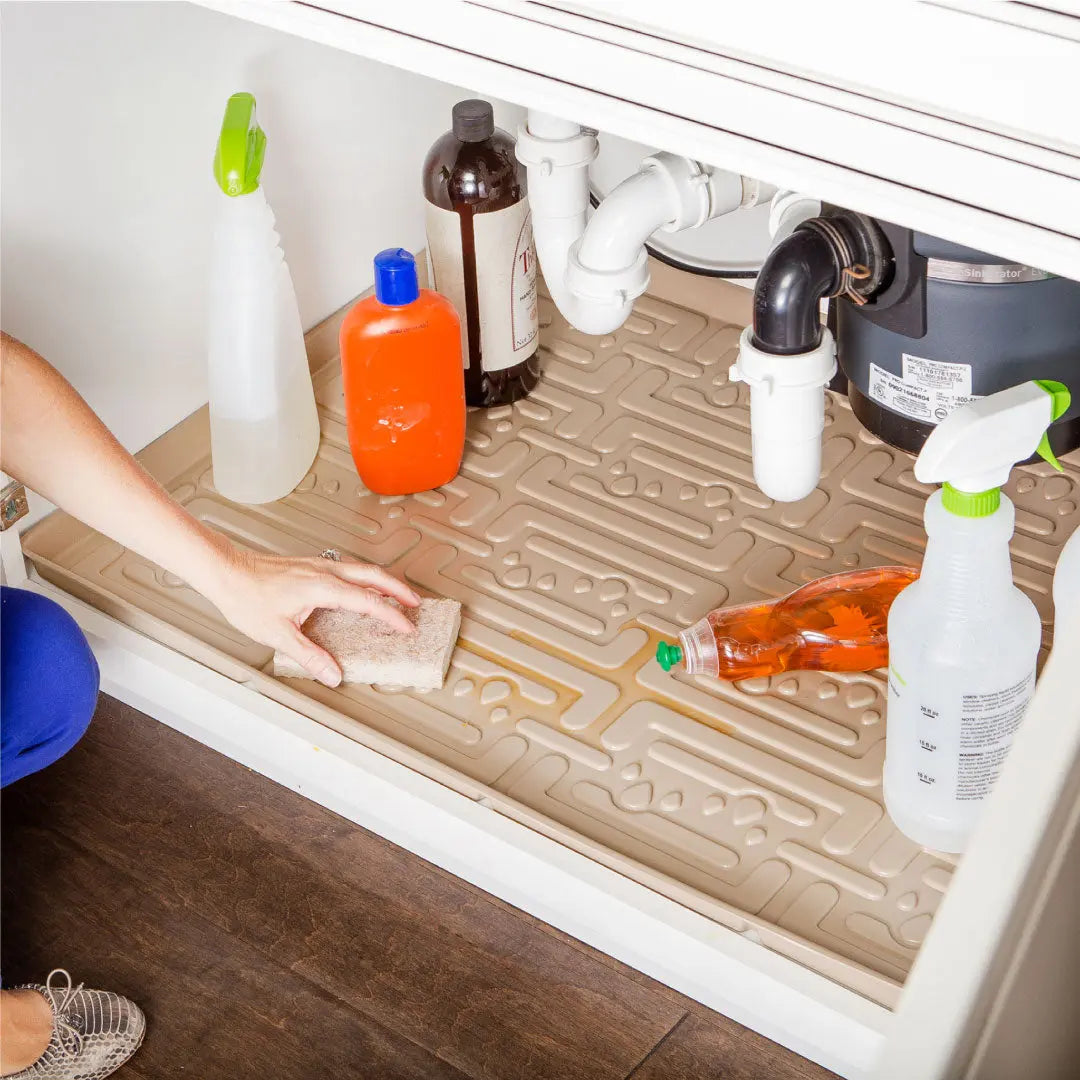
- One mat per sink cabinet. Our under-sink cabinet mats come in 16 kitchen and vanity sizes. Model numbers match the cabinet's exterior width, with CM-xx for kitchen sink bases and CMV-xx for vanities, so a CM-36 fits a 36-inch kitchen sink base and you can order from your unit-type specs. Kitchen mats have a 1-inch raised lip and vanity mats a ¾-inch lip, and the largest size holds up to 3.7 gallons. Every mat has a designated spot for the leak sensor.
- One leak sensor per sink. The mat contains the water first, and the sensor sounds a loud alarm when it detects water. That's what we mean by prevention before detection.
- Install at turnover, then fill in during service calls. NAA's apartment turnover guidance already builds preventive maintenance and pre-move-out inspections into the make-ready process. Placing a mat and sensor in an empty, cleared-out cabinet takes minutes, as long as the supply lines and drain come through the back wall. Where they come up through the cabinet floor, the mat needs a simple modification first. Occupied units can be done during routine work orders.
- Per-unit cost = (sink cabinets × mat) + (sinks × sensor). Trade pricing is based on order volume, so request a quote for your unit count.

On the accounting side, small preventive items like these are often booked as maintenance supplies under many companies' capitalization policies. How you classify them, and what counts as "spent" by December 31, depends on your organization's policies. Check with your accountant or finance team before you assume either way. This isn't tax or accounting advice.
Add a "cabinet protection" line to the 2027 budget
Here's the part that's easy to overlook. Our water leak sensor uses a sealed battery, so we recommend replacing the whole sensor every two years from installation. An expiration date is also printed on the bottom as a backstop, and your techs can check it during any inspection. That makes the sensor a predictable, recurring line item instead of a one-time project. To confirm each sensor works, test it once a year by placing a damp paper towel across the two prongs on the bottom.

For 2027, I'd suggest a dedicated Cabinet Protection line with two parts:
- New installs: mats and sensors for units not yet covered, planned around your expected turns.
- Sensor replacement cycle: sensors installed in a year-end 2026 rollout all come due at the end of 2028, so 2027 needs little replacement budget and 2028 needs a portfolio-wide replacement. Staggering installs across turns spreads that cost out.
The mats are a one-time purchase, so after the initial install, the recurring cost is mostly sensors. Putting it on its own line also gives you a clean record to show your broker at renewal.
The bottom line
"The question isn't if you'll have a leak under your sink, it's when, and whether you'll be prepared. Prevention before detection."
— Brandon Burkey
The question isn't if you'll have a leak under a sink, it's when, and whether you'll be prepared. Year-end dollars that would otherwise disappear can buy real, documented protection in the place leaks start. A 2027 cabinet protection line keeps that protection current.
We've been making under-sink protection since 2013, and we work with property teams on portfolio rollouts. If you'd like to plan one for your communities, request a volume quote or place a trade order through our B2B ordering portal.
Frequently asked questions
How much does under-sink water damage cost an apartment owner?
It depends on how far the water travels before someone finds it. Published homeowner figures put sink-related water damage at about $7,000 (Hanover) and replacing the bottom of a kitchen cabinet at about $5,000 (Angi, 2026). In an apartment, add the days a unit sits offline, any damage to the unit below, and your team's time. Your own work-order and claims history is the best number to plan with.
Do leak sensors lower multifamily insurance premiums?
They can help, but it depends on your carrier. Multi-Housing News reports that some insurers offer better terms for leak detection, and IREM says underwriters now look for evidence of water intrusion controls. A documented, property-wide under-sink program gives your broker that evidence for the renewal submission.
How often should under-sink leak sensors be replaced?
Xtreme Mats sensors have a sealed battery, so we recommend replacing each sensor every two years from installation. An expiration date is printed on the bottom as a backstop. Test sensors once a year by placing a damp paper towel across the two prongs on the bottom.
What size cabinet mat fits a 36-inch sink base?
A CM-36 fits a 36-inch kitchen sink base, and a CMV-36 fits a 36-inch vanity. Model numbers match the cabinet's exterior width, and the mats come in 16 kitchen and vanity sizes.
Can unspent year-end budget go toward cabinet mats and leak sensors?
Often, yes. They need no permits and have short lead times, so they fit the projects you can complete by December 31. How you classify the purchase depends on your organization's capitalization policy, so check with your accountant or finance team.
Share:
Home Organization Guide: How to Organize (and Protect) Every Cabinet, Drawer and Shelf in Your Home